



Hybrid gym memberships give you the best of both worlds by blending in-gym access with live and on-demand digital workouts, so you can train anywhere while still enjoying in-person coaching and community support. This modern hybrid model has become one of the dominant trends in the fitness industry, with both consumers and gyms embracing it for convenience, retention, and better results.
What Are Hybrid Gym Memberships?

Hybrid gym memberships combine traditional gym access (equipment, classes, trainers) with virtual options like live-streamed classes, on-demand workout libraries, and remote coaching. Instead of being locked into either a physical gym or a fitness app, members can switch between in-person and online sessions based on schedule, location, or preference.
In practice, this might look like attending strength training at the gym twice a week, joining a live Zoom yoga class from home, and using an app-based HIIT workout while traveling. The key idea is that your membership follows you, not the other way around.

Why Hybrid Gym Memberships Are Growing
Hybrid gym memberships exploded during and after the pandemic and have now become a long-term shift rather than a temporary fix. Many members discovered they could maintain or even improve their results by mixing home workouts, virtual coaching, and in-person sessions.
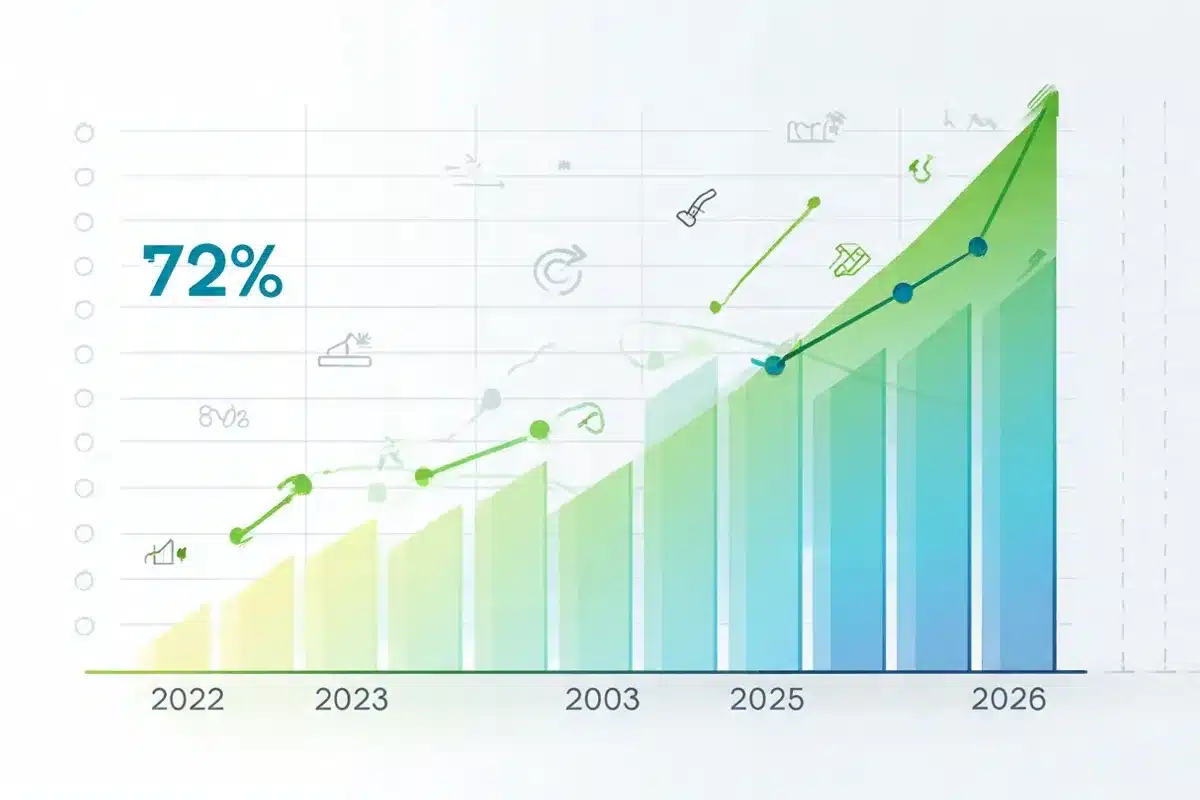
Recent data shows this preference clearly: around 72% of people now say they like the flexibility of online fitness, and many report exercising as much or more online than they did before. Industry analyses also highlight that a majority of members prefer hybrid or digital-enhanced models, and a large share of clubs have already added hybrid options to meet that demand.
Key Benefits of Hybrid Gym Memberships
Hybrid gym memberships are built around flexibility, personalization, and consistency, which for most people translates into better adherence and more sustainable progress over time. When members have options to train the way they prefer, they stay committed longer.
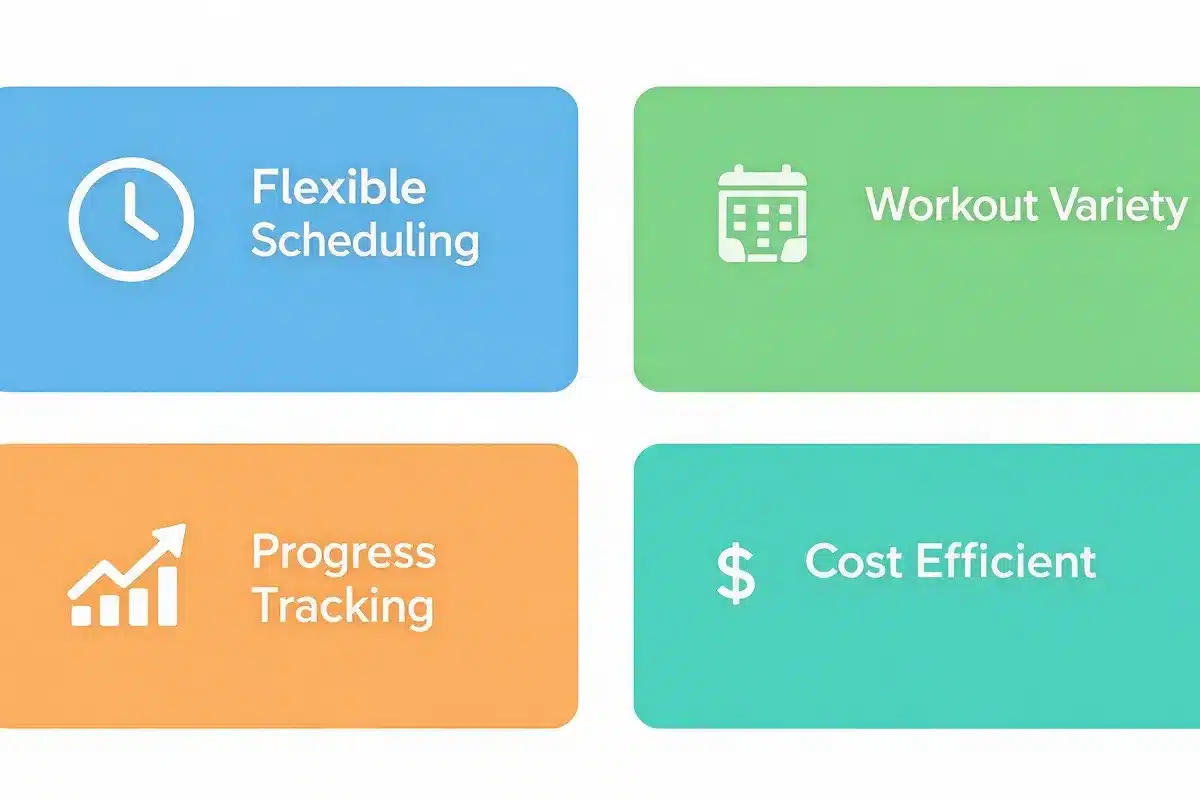 Major benefits include:
- Flexible scheduling that fits work, family, and travel
- More workout variety (strength, cardio, yoga, mobility, recovery)
- Better accountability through digital tracking and coaching
- Cost efficiency compared with unlimited in-person-only memberships
Flexibility and Convenience
Hybrid memberships allow members to attend the gym when convenient and train at home or on the road when time or distance is a problem. This is especially valuable for busy professionals, parents, and frequent travelers who might otherwise skip workouts.
Many gyms now offer live-streamed classes, virtual PT sessions, and on-demand videos, making it easy to stay on track even with a shifting schedule. Because members can choose the format that works each day, overall consistency tends to improve.
Better Results Through Variety
Alternating between in-gym and home-based sessions lets members combine heavy lifting and specialized equipment with low-equipment or bodyweight workouts. This mix supports strength, endurance, mobility, and recovery without requiring daily commutes to the gym.
For example, a member might use machines and free weights in the gym for compound lifts, then follow virtual mobility or yoga at home to support joint health and injury prevention. This comprehensive approach often matches or exceeds the results of a purely gym-based plan, while being easier to sustain.
Improved Motivation and Accountability
Digital platforms that power hybrid memberships often include features such as progress tracking, workout history, leaderboards, and challenges. These elements can significantly boost engagement and help members see their progress in real time.
Some systems also integrate with wearables (smartwatches, fitness bands) to track steps, heart rate, and calories, tying at-home activity back into the gym’s coaching and programs. When members feel seen and supported both online and in-person, they are more likely to stay active and remain members longer.
Cost and Value
Hybrid options can offer strong value because they spread access across multiple channels rather than relying only on premium in-person time. Some gyms now sell digital-only or hybrid tiers that are more affordable than unlimited in-person memberships while still offering structure, classes, and coaching.
For members who use a mix of modalities, this often means paying less than they would for separate app subscriptions plus a full gym membership. For gyms, hybrid memberships create new revenue streams and extend their reach beyond the immediate local area.
How Hybrid Gym Memberships Work in Practice
Hybrid memberships vary by gym, but most combine several core components. Understanding how these pieces fit together helps you decide which model best matches your goals and lifestyle.
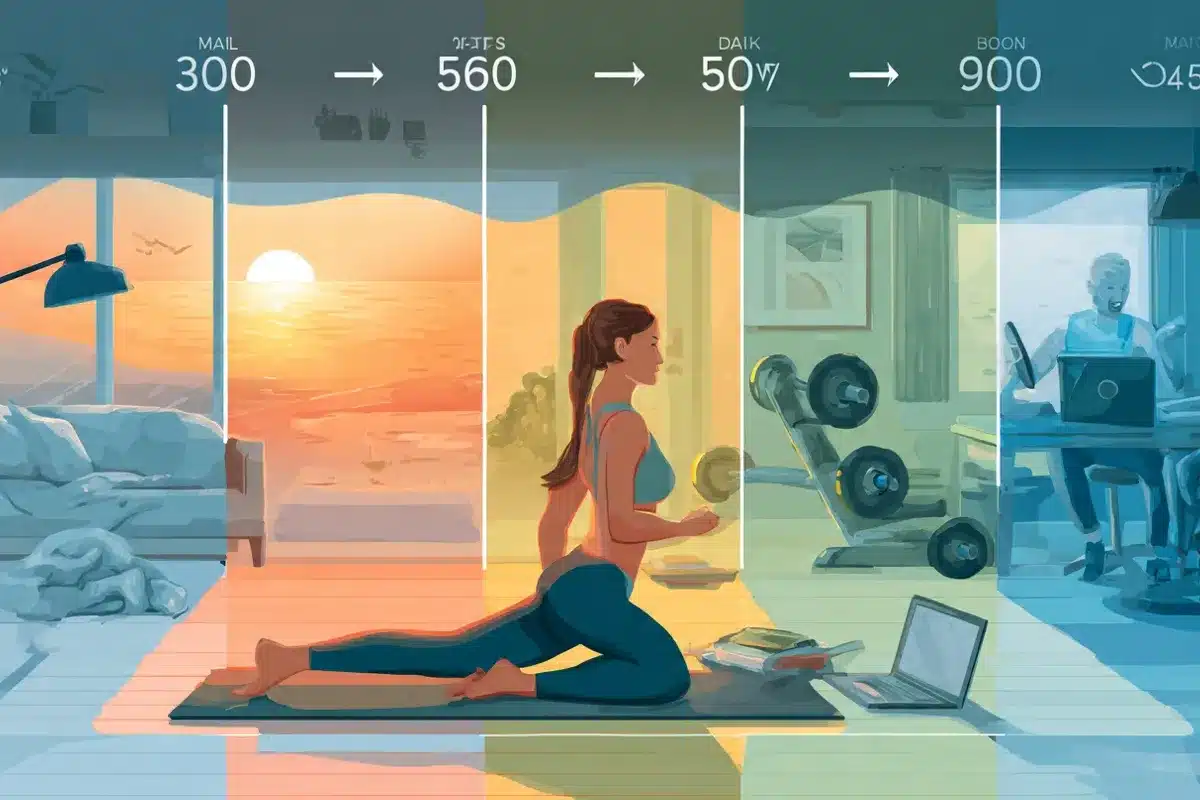
Common elements include:
- Standard gym access (equipment, lockers, in-person classes)
- Live-streamed group classes
- On-demand workout libraries
- Virtual PT or coaching
- Mobile app or member portal for scheduling and tracking
In-Gym Access and Amenities
The in-person side usually includes traditional gym benefits: strength and cardio equipment, group classes, and possibly extras like saunas or recovery zones. Hybrid members often have the same on-site privileges as standard members, especially in higher-tier plans.
Some facilities also offer hybrid-specific in-person options, such as sessions that pair on-floor training with app-based homework or follow-up routines. This bridges the gap between what you do in the gym and what you do at home.
Digital Classes and On-Demand Workouts
Virtual elements typically include: live-streamed group workouts, on-demand class libraries, and structured multi-week programs delivered through an app. Members can join live sessions in real time for extra motivation or replay recordings when their schedule is tight.
Content usually covers strength, HIIT, yoga, Pilates, mobility, and sometimes low-impact or beginner-friendly tracks. This breadth of choice helps members find formats they enjoy, which is critical for long-term adherence.
Remote Coaching and Support
Many hybrid models now include some form of remote coaching, such as virtual PT sessions, form checks via video, or messaging-based support. Coaches can adjust programs, review tracking data, and hold members accountable between in-person visits.
This “always-on” support model keeps members engaged day-to-day instead of only during scheduled gym sessions. It also allows coaches to serve more people efficiently by combining group content with targeted one-on-one feedback.
Types of Hybrid Gym Memberships
Different pricing and access structures have emerged as hybrid becomes standard. Choosing the right type depends on how often you plan to visit the gym, your budget, and how much guidance you want.
Below is a simplified overview:
| Membership type | Typical features | Best for |
| In-gym + full digital | Unlimited gym access + full virtual library and live classes | Enthusiasts who train 4–5 times per week in multiple formats |
| Limited visits + digital | Fixed in-person visits per month + full app access | Busy professionals wanting flexibility and cost control |
| Digital-first hybrid | Mostly virtual; occasional in-person drop-ins or events | Remote members or those far from the gym fitness |
| Family / multi-user | Shared hybrid access for households | Families mixing kids’ and adults’ fitness needs |
Some clubs also offer add-ons, such as nutrition coaching, specialized programs (like marathon prep), or wellness services (meditation, recovery sessions). These extras can usually be layered onto any core hybrid tier.
Pros and Cons of Hybrid Gym Memberships
Hybrid gym memberships are not perfect for everyone, so weighing the upsides and trade-offs is important. Consider your habits, access to equipment at home, and how much structure you need.
Advantages
- Strong flexibility for busy or irregular schedules
- Ability to train anywhere (home, gym, travel)
- Wide variety of formats to prevent boredom
- Higher engagement and retention in many gyms
- Potentially better value than separate gym and app fees
One analysis notes that hybrid memberships (combining in-person and virtual) can improve member retention by around 40% for gyms, largely because people feel more supported and less likely to drift away. For members, that same flexibility and support usually translate into more consistent training weeks.
Potential Drawbacks
- Some members may feel overwhelmed by too many options or platforms
- Requires basic technology comfort (apps, streaming, wearables)
- At-home workouts can be harder to focus on if your space is distracting
- Lower-tier plans may limit in-person access or premium content
If you know you thrive on face-to-face accountability and struggle to exercise at home, a purely in-person membership might still be better. On the other hand, if commuting is your main barrier, the hybrid approach helps remove that friction without giving up gym support entirely.
Current Trends and Statistics for Hybrid Gym Memberships
Hybrid fitness has shifted from a niche experiment to a mainstream expectation. Members now assume their gym will offer at least some digital options alongside traditional access.
Recent trend reports highlight:
- A strong consumer preference for flexible, online-enabled fitness, with over 70% of members engaging in digital workouts as much or more than before the pandemic.
- A large share of gyms—often cited at around 40% or more—now implementing hybrid offerings, including virtual classes and digital memberships.
- Growing investment in technology, apps, and wearables to support hybrid experiences and improve engagement and retention.
These numbers show that hybrid is no longer a temporary response; it is shaping how gyms design services, price memberships, and support members day to day.

Choosing the Right Hybrid Membership for You
Picking the right hybrid plan starts with clarifying your goals, schedule, and preferred training style. Once you understand those, it becomes easier to match them to what a gym or platform offers.
Use these steps as a simple guide:
- Define your primary goal (fat loss, muscle gain, general health, performance).
- Estimate realistic weekly workout frequency and preferred days.
- Decide how many sessions you want in person versus at home.
- Check whether you have (or can create) a basic workout space at home.
- Compare plans on price, app quality, class variety, and coaching access.
Questions to Ask a Gym About Hybrid Options
Before signing up, ask:
- What exactly is included in the hybrid membership (gym access, classes, app features)?
- Are live-streamed and on-demand classes included or extra?
- How easy is it to book, cancel, and reschedule classes from the app?
- Is there remote coaching, form feedback, or messaging with trainers?
- What happens if you travel or move—can you stay on a digital-only tier?
The more transparent a gym is about how its hybrid model works, the easier it is to know if it matches your lifestyle.
Example Hybrid Fitness Week
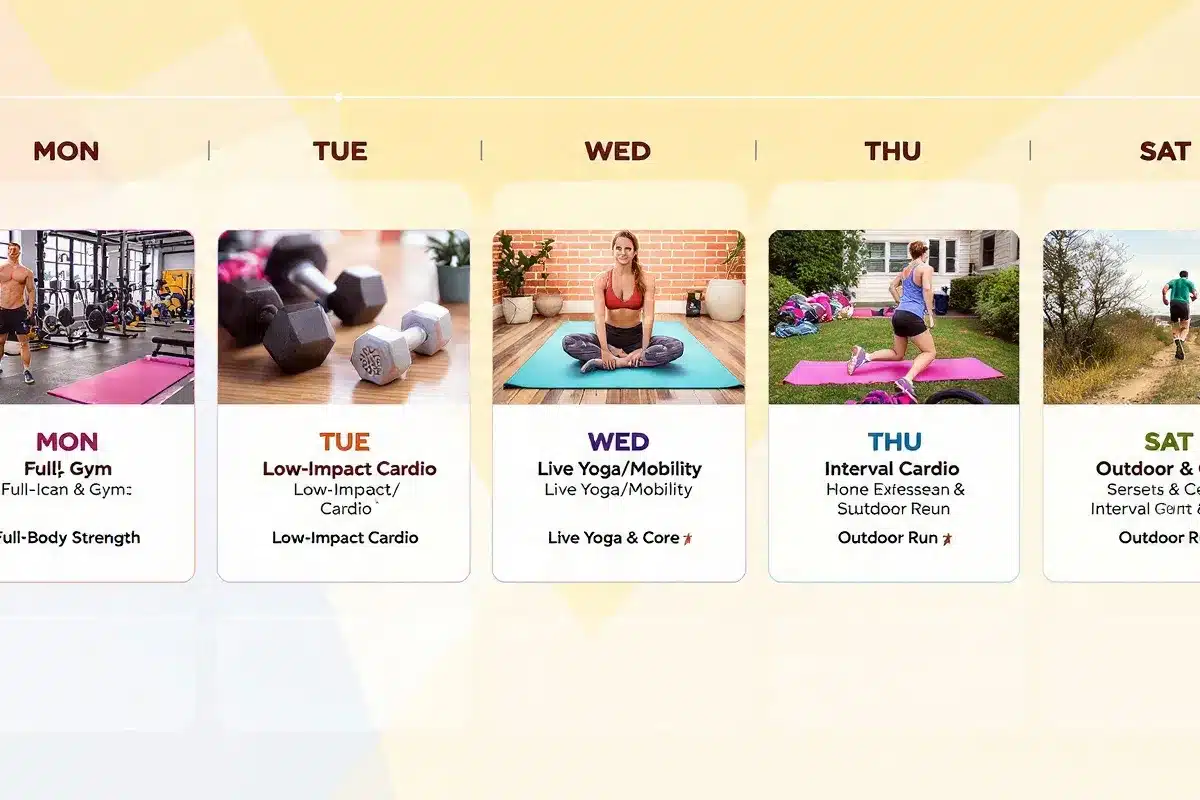
To make the concept concrete, here is what a balanced hybrid week might look like for someone focused on general fitness and weight management.
- Monday: In-gym full-body strength session (machines and free weights)
- Tuesday: 30-minute on-demand low-impact cardio at home
- Wednesday: Live-streamed yoga or mobility class
- Thursday: In-gym interval cardio and core work
- Saturday: Outdoor walk or run tracked via wearable and synced to app
This structure uses the gym for heavy lifting and higher-intensity work while relying on home and virtual options to fill gaps and support recovery. It keeps total time commitment realistic while building a well-rounded routine.
Who Should Consider a Hybrid Fitness Membership?
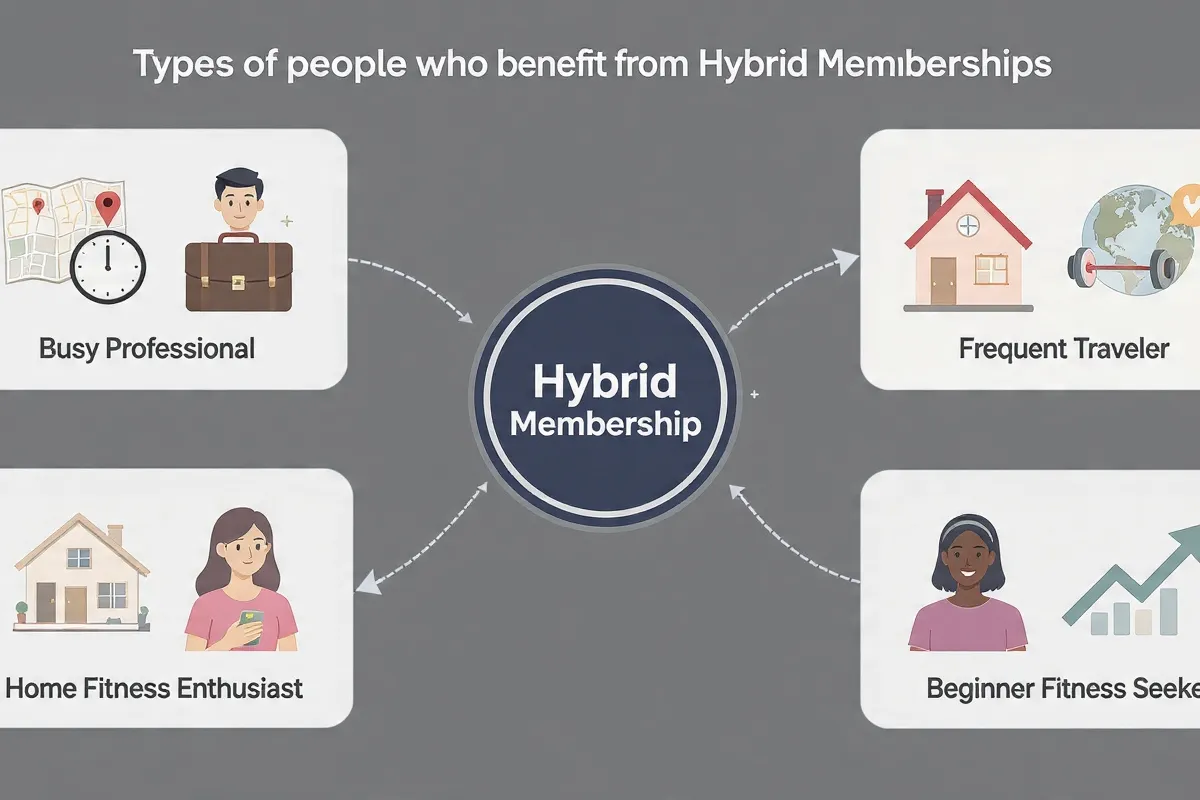
Hybrid memberships are especially useful if:
- You have an unpredictable schedule or travel often
- You enjoy mixing gym sessions with home workouts
- You want digital tracking, coaching, or structured programs
- You feel more motivated by both in-person and virtual communities
They can also be helpful for beginners who feel nervous about the gym environment; starter programs can happen at home first, then gradually blend into in-person classes. For advanced lifters or athletes, hybrid models provide extra tools for accessory work, recovery, and data tracking.
Conclusion: Is a Hybrid Fitness Membership Worth It?
For most people today, a hybrid fitness membership is one of the most practical and sustainable ways to stay active because it combines the best of in-person training with the convenience of digital fitness. As more gyms and platforms invest in hybrid models, members gain access to higher-quality content, better technology, and more personalized support without sacrificing flexibility.

If your goal is to build a long-term, realistic fitness habit that can survive busy periods, travel, or life changes, a well-designed hybrid membership is worth serious consideration. Look for a plan that matches your goals, fits your budget, and makes it easy to move seamlessly between the gym floor, your living room, and wherever else you choose to train.
Frequently Asked Questions About Hybrid Gym Memberships
- What is the difference between a hybrid fitness membership and a regular gym membership?
A regular gym membership usually focuses on in-person access to equipment and classes, while hybrid gym memberships add digital elements like live-streamed workouts, on-demand videos, and remote coaching. Hybrid gym memberships are designed to support members both inside and outside the facility, not just during gym visits. - Do hybrid fitness memberships really improve consistency?
Many people report higher consistency with hybrid gym memberships because they can switch to at-home or virtual workouts when they cannot make it to the gym. Industry data also shows that flexible, hybrid-style offerings improve engagement and retention for gyms, which suggests that people are sticking with their routines longer. - Do I need special equipment at home for a hybrid membership?
Basic hybrid plans often require only bodyweight and simple equipment like resistance bands or light dumbbells for home sessions. If you want more advanced strength work at home, you can gradually add items like adjustable dumbbells, a bench, or a kettlebell, but many programs are designed to work with minimal gear. - Are hybrid memberships more expensive than traditional memberships?
Pricing varies, but hybrid gym memberships are not always more expensive; some gyms offer hybrid tiers that are comparable to or even cheaper than full in-person-only memberships by shifting some training to digital formats. Because you get both physical and virtual access, the cost per usable workout can actually be lower if you take advantage of all channels. - Can beginners use hybrid fitness memberships effectively?
Yes, beginners can use hybrid gym memberships effectively by starting with beginner-friendly virtual programs and gradually adding in-person classes or PT sessions for form checks and confidence. The mix of self-paced content and live support can make the early stages of fitness less intimidating while still offering guidance. - How do I know if a gym’s hybrid program is high quality?
Look at the app interface, class library variety, coaching credentials, and how often new content is added. Reviews, trial periods, and sample classes are useful for checking video quality, instructor clarity, and how well the digital side integrates with the in-person experience. - Can a hybrid fitness membership help with specific goals like weight loss or muscle gain?
Hybrid models can support specific goals by combining structured strength plans in the gym with supplemental cardio, mobility, and habit-based programs at home. When paired with tracking tools and, in some cases, nutrition guidance, hybrid memberships can create a complete framework for fat loss, muscle building, or performance training.
References:
- https://www.clubautomation.com/resources/health-club-membership-trends-key-insights-from-2024
- https://fitness.edu.au/the-fitness-zone/hybrid-fitness-combining-in-person-and-virtual-workouts/
- https://www.clubworx.com/blog/hybrid-fitness-model-how-to-adapt
- https://smarthealthclubs.com/blog/100-gym-membership-retention-statistics/
- https://visualclubmate.com/news/hybrid-gym-model-playbook/